Real examples of nailing AI Qualifications
Last updated: September 8, 2026
AI Qualifications let you go beyond standard filters to validate companies based on information only available on the open web. They work best when the condition you need cannot be captured by traditional filters like industry, size, or location, but can be verified by reading a company's website or publicly available sources.
This article covers real-life examples of successful use use cases of AI Qualifications. These will give you a practical idea of what’s a correct use of AI Qualifications.
1. Company sells goods through an e-commerce website
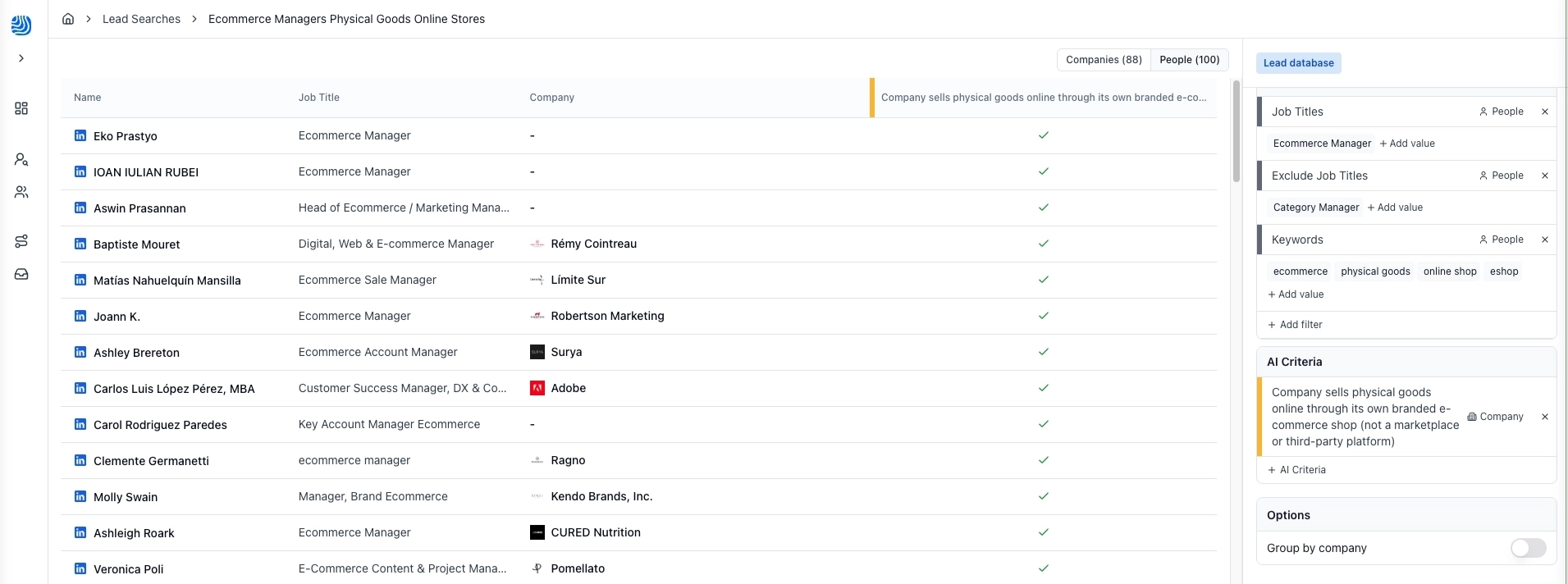
Why it works: Standard keyword filters can narrow results to companies that mention "e-commerce" somewhere in their description, but that does not guarantee the company actually operates an online shop. Topo’s AI Qualifications can visit the company's website and confirm whether it genuinely sells products through an e-commerce storefront. This is a condition tied to what the website shows, not to metadata, which makes it a perfect fit.
2. Company offers Hosted Desktops
Why it works: This is another case where the relevant information lives on the company's website, specifically in its product or service offering. No standard filter can tell you whether a company sells "hosted desktops" as a service. AI Qualifications can read the company's site and verify this directly, making it easy to build a highly targeted list around a niche offering.
3. Exclude subsidiaries of large enterprise groups
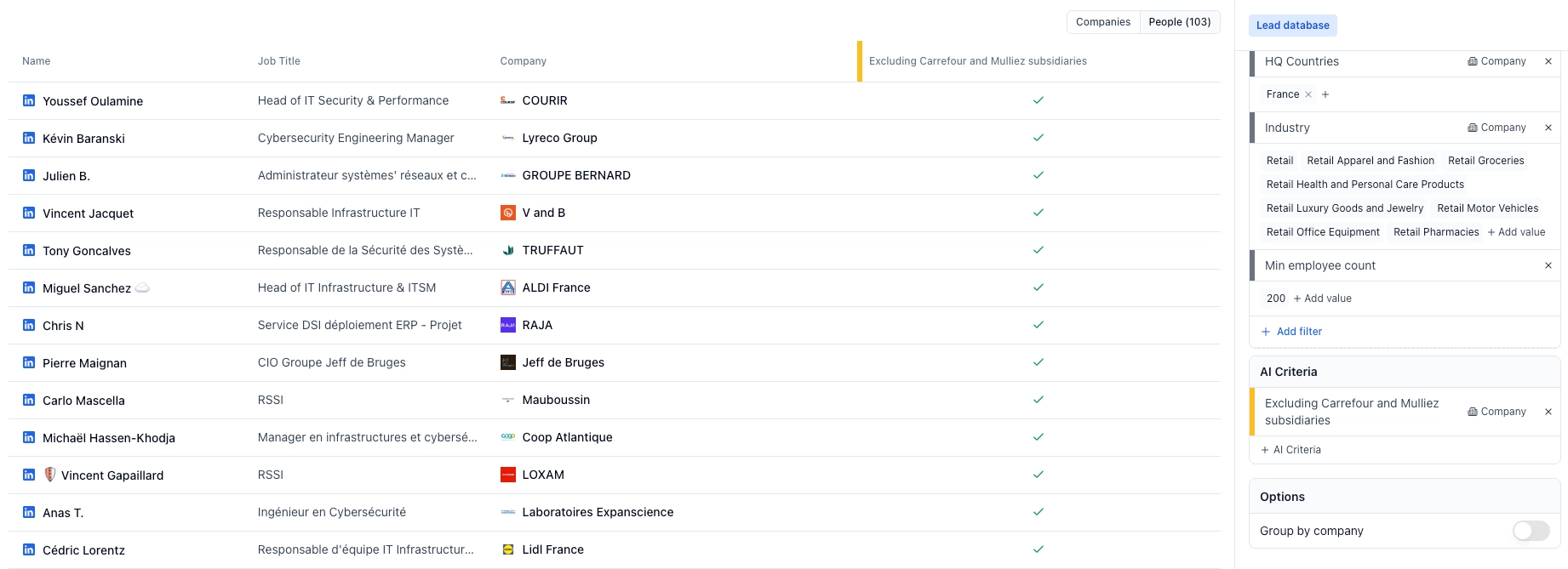
Why it works: There is currently no filter to determine whether a company is a subsidiary of, or owned by, another company. For large, well-known groups like Carrefour or Mulliez, this ownership information is publicly available on the internet. AI Qualifications can look it up and exclude those subsidiaries from your list, something that would otherwise require tedious manual research.
4. If no information available, validate it
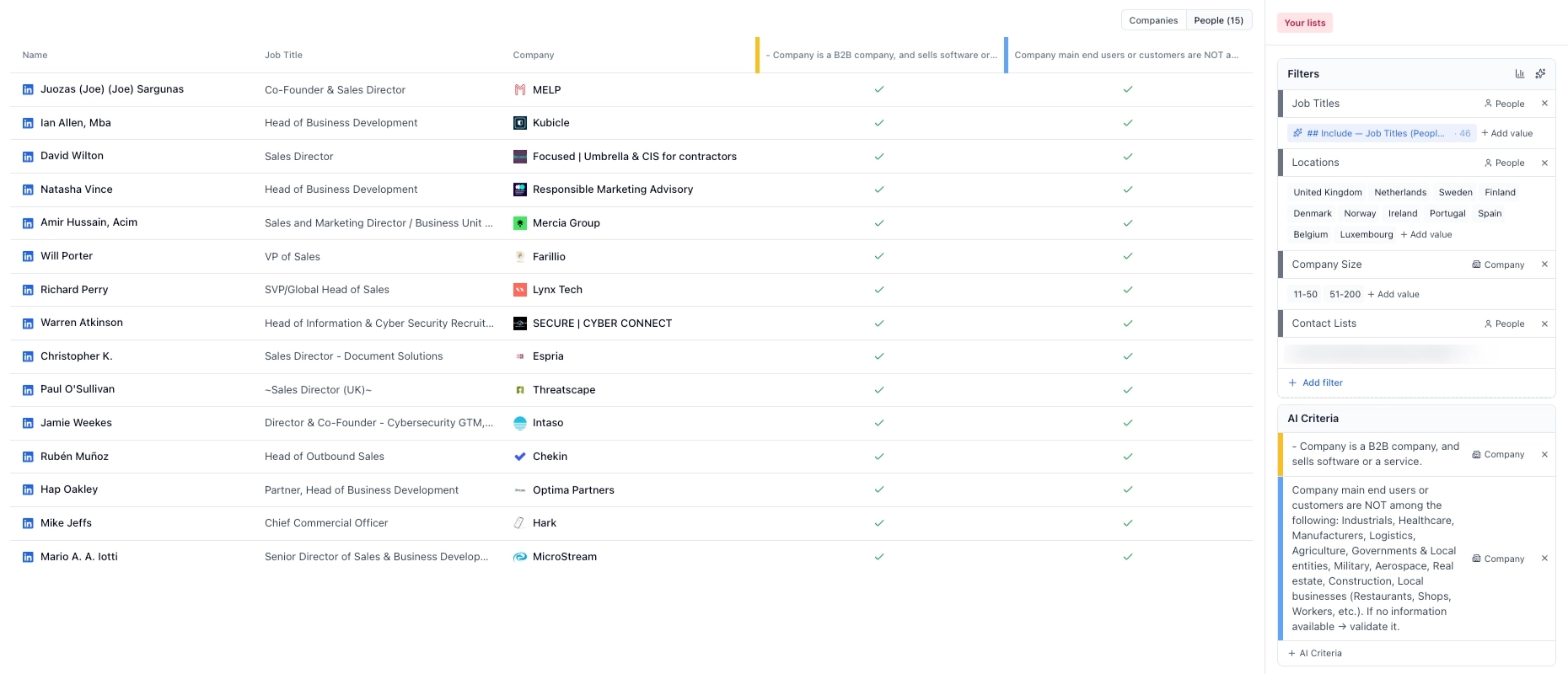
Why it works: This example shows how you can fine-tune AI Qualification behaviour with a fallback instruction. Here, the filter first checks whether the company's end users or customers belong to a set of excluded industries (a negative prompt). Then, it adds: "if no information is available, validate it." By default, AI Qualifications would reject a company when it cannot find enough information. But if your exclusion is not strict and you would rather keep companies in doubt than lose them, this instruction flips the default behaviour. It is a powerful way to control how uncertain results are handled.
5. Company is selling software or a corporate service
Why it works: Like examples 1 and 2, this checks what the company actually sells via its website. What makes this one especially useful is the OR condition: the criteria validates the company if it sells at least one of software or corporate services. This means you can combine multiple “or” conditions in a single filter, broadening your targeting without sacrificing relevance.
What these examples have in common
All the above examples share the same trait: they rely on information that is publicly available on the internet but not captured by any standard filter.
Whether it is what a company sells, how its website works, or who owns it, these are things a human would verify by visiting a website and reading.
AI Qualifications automate exactly that step, letting you target or exclude companies based on real-world context that no database field can give you.